
Stamped concrete services in Mission TX - a patterned slab with grip when it's wet
Tired of plain gray concrete, or planning a new patio or walk? We pour it, stamp the pattern while it's fresh and seal it.
Good stamped concrete comes down to timing
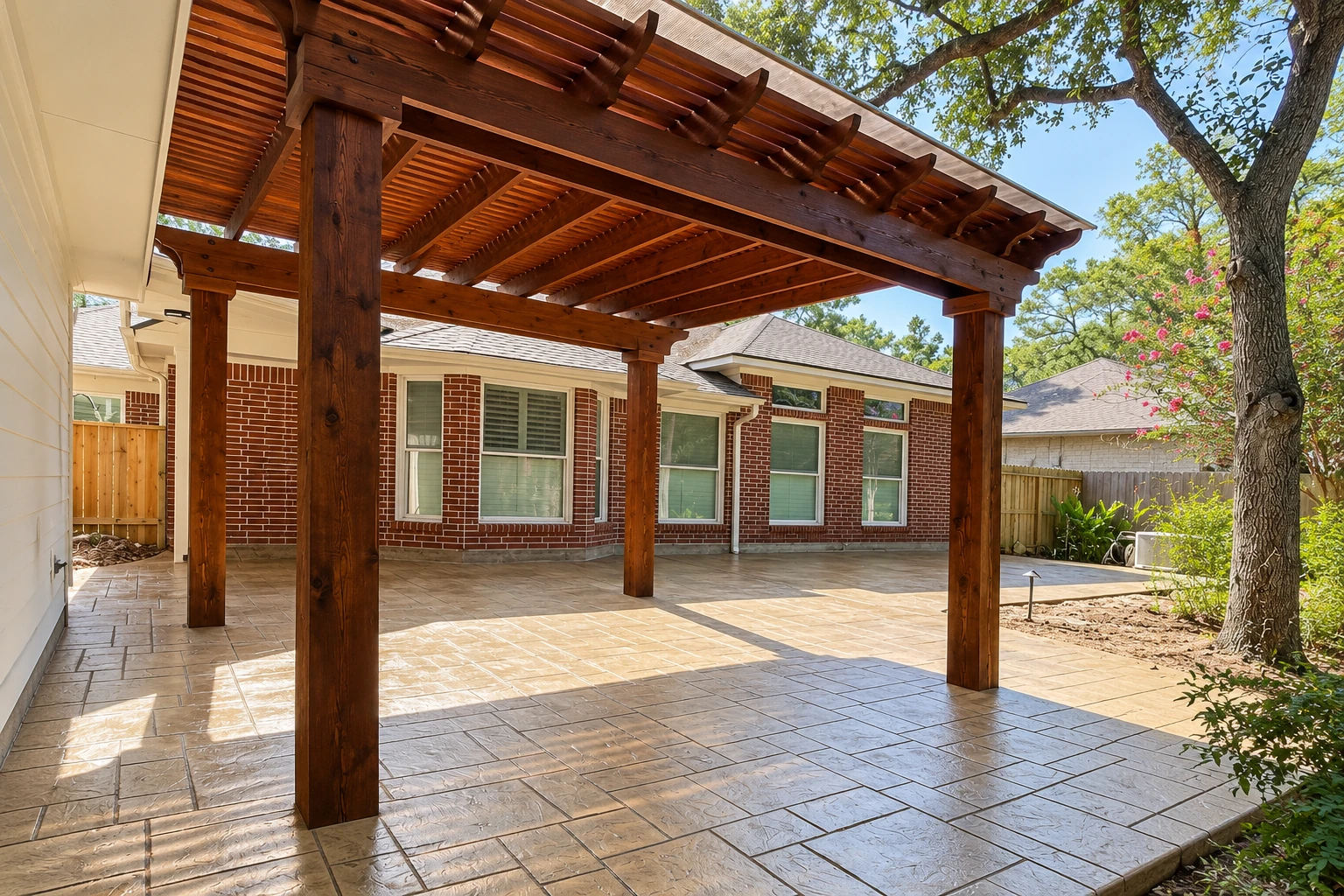
Stamped concrete in Mission, TX starts as an ordinary slab. Our crew presses a pattern into it while it's fresh, then cures it and seals it. People usually call us for patios, pool areas and a new sidewalk. Most of the trouble we see comes from a rushed pour day, when the concrete sets before the stamping's done.
The price moves with the slab's size, the digging and base work your ground needs, and how much of it gets stamped. The schedule turns on the permit, the weather and the cure. We're licensed and insured. When a job needs a permit, we file it with the city and set the pour date once it's issued. Your on-site quote spells out each part of the job.
- A dug-out, packed base under the pattern
- A slab that slopes away from the house
- A pattern pressed evenly out to the edges
- A sealer with grit for footing
Plain, bordered or fully stamped
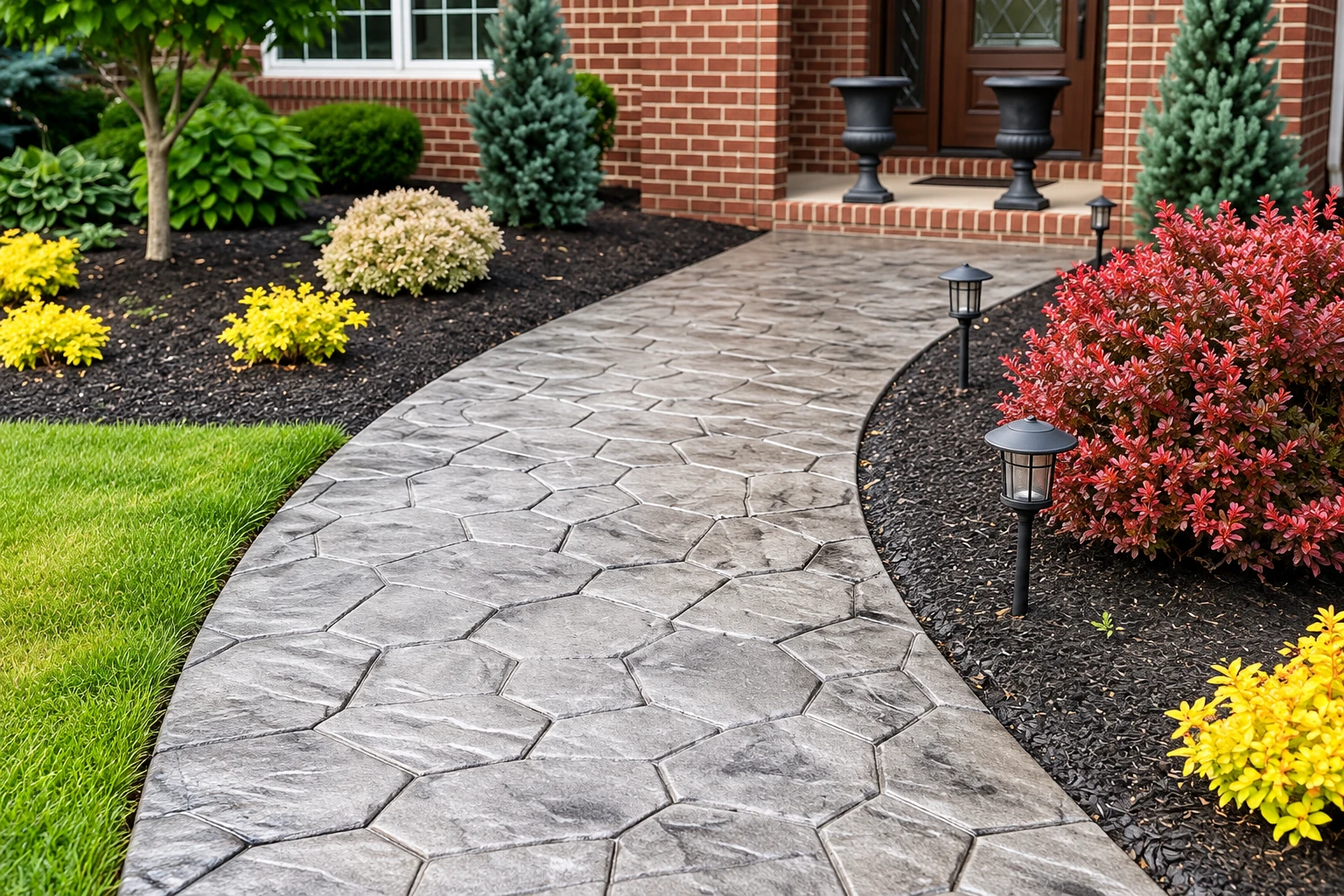
Stamping takes more hands and more time on pour day, so it's worth putting the pattern where you'll see it most and keeping the rest simple.
Plain broom finish
- When it suits
- Side yards, driveways and spots where grip matters more than looks.
- What it takes
- A broom finish, which is a brushed texture for footing, and a smaller crew on pour day.
Stamped border
- When it suits
- Patios and walks where you want some pattern without stamping it all.
- What it takes
- A stamped band around a plain center, so fewer hands are racing the set.
Fully stamped
- When it suits
- A patio or pool area you use and see every day.
- What it takes
- A full crew stamping fast before it sets, then resealing as regular upkeep.
How a stamped pour gets planned
Look and measure
After you call or send the form, I come out myself. I measure, check how water moves across the ground and write a quote that spells out each part.
Permit, forms and grades
Before pour day we file any permit the job needs and set the forms. We check the grades with a string line and watch the forecast for heat and wind.
Pour and stamp
Concrete sets faster in Mission's subtropical heat, so we pour outside the hottest part of the day with enough hands to stamp before it stiffens. I'm on site with the crew.
Cure
We start curing right after stamping and keep the slab moist, because concrete that dries too fast ends up with a weak, dusty top.
Seal and clean up
Once the slab has cured, we seal it and add grit while the sealer's still wet so it has some footing. Then we clean up the site.
What to weigh before you stamp
These points change how we plan the slab and what goes on the quote, so it helps to think them through before I come out to measure.
Base before pattern
The base is the packed ground under the slab, and nobody sees it, so it's the first thing people want to cut. I'd stamp less before I'd skimp there, because loose dirt settles and cracks the pattern.
Your ground and its slope
A lot of the ground around Mission is deep, well-drained loam, but not every lot is. I check yours and set the slope so rain runs away from the house.
Wind and dry days
Low humidity and strong wind can dry a fresh slab too fast and crack the top. Ask what the crew will do, because trade guidance says windbreaks, shade or misting may be needed.
Where stamping makes sense
Stamping suits patios, walks and pool areas. A garage floor usually works better plain and smooth, because a pattern catches dirt and oil where you park.
What good stamped work looks like
Look for a pattern that runs evenly to the edges, clean joints and a sealer with no puddled spots. Open any photo for a closer look.
Tell us about your slab
Tell us where the slab goes, how big it is and what it's for. We reply within one business day, and I come out to quote it free, with no obligation.
To talk now, call
(956) 379-6556Stamped concrete questions we hear
Another question? Call (956) 379-6556
Do I need a permit for a stamped slab in Mission?
Almost always. The City of Mission's Inspections Division requires a permit for any concrete slab with a value of $100 or more, and that covers nearly any stamped patio or walk. We handle the application and set the pour date after it's issued. You can reach the office at 956-580-8691 if you'd like to check.
How long does new stamped concrete need to cure?
National trade guidance says curing should run at least 3 days, starting as soon as finishing is done. During that time, crews keep the slab moist with wet burlap and plastic, a curing compound or water. Plan that stretch into your schedule, and I'll tell you when the slab is ready to use.
How often does stamped concrete need to be resealed?
One sealer maker says its product should be re-applied every 18 to 24 months to keep the finish. Treat it as regular upkeep, and budget for it. That same maker advises against sealing in direct sun or the hottest part of the day, so a cool morning is the time to do it.
Will sealed stamped concrete be slippery when it's wet?
It can be. One sealer maker warns its product may get slick when wet, and another says traction can drop with each coat. We'll tell you which sealer we use, and we add grit while it's still wet so the surface has some bite, which matters most around a pool.
Will my new stamped patio crack like my old concrete?
Concrete can crack, but good work controls where. We dig out and pack the base, as covered above, and cut control joints. These are grooves that give the slab a planned place to crack. We also start curing right after stamping so the top doesn't dry out too fast.